For people curious about how they decide, Decision Cube turns eight fictional situations into a readable account of their choices. We built the assessment, scoring, saved results and sharing experience, then gave the result a visual identity that invites exploration.
Inside the application
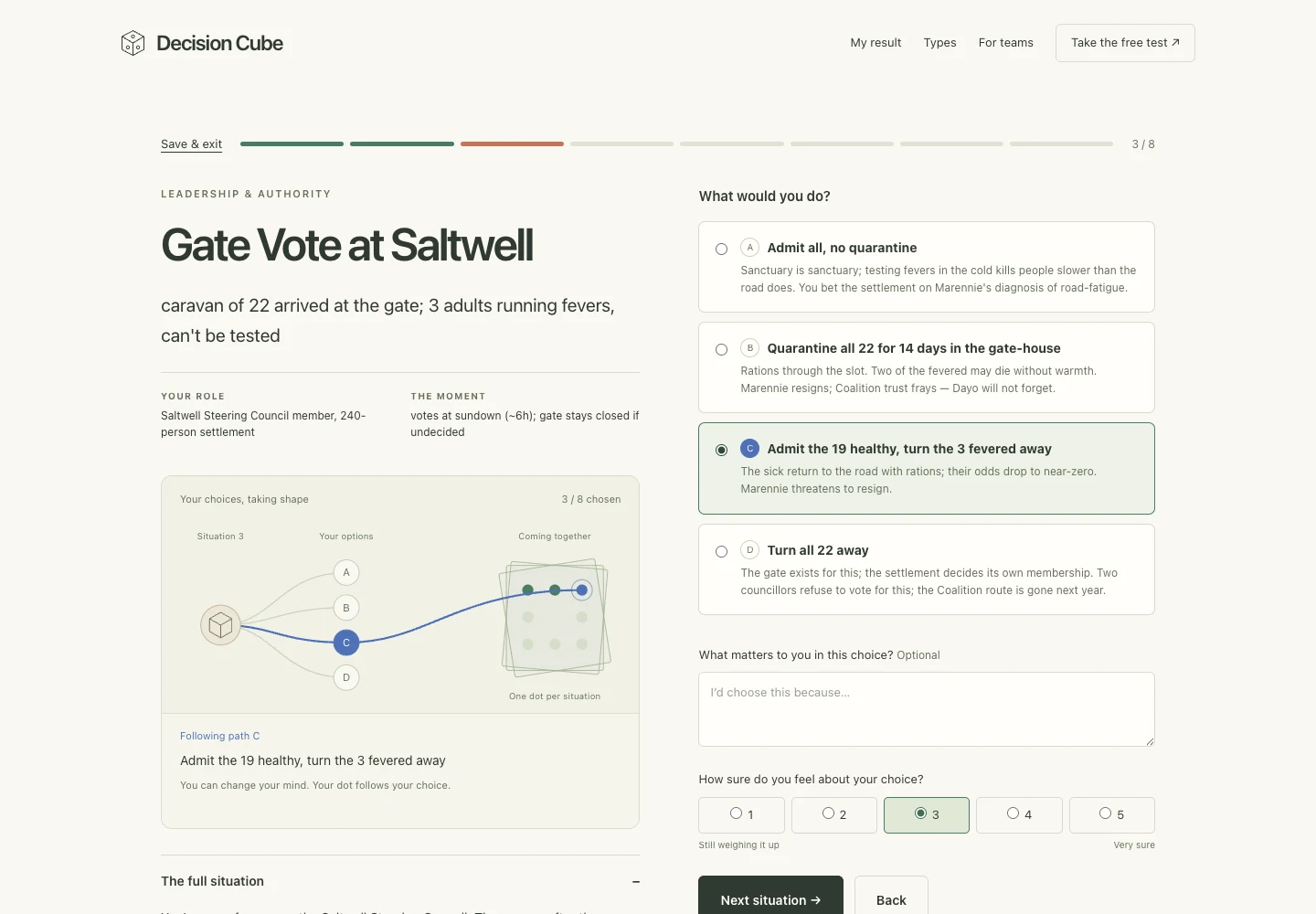
Start with a situation. Come back with reasons.
Choose what you would do, optionally explain why, and rate how sure you feel. Move through eight situations, revisit a choice or resume a saved draft. On completion, the application returns a type, a priority breakdown and a short account of the responses behind it.
Actual assessment application · local preview with supplied sample scenarios · no participant records
The choices determine the result
Each option has an editorially assigned priority. The server validates the scenario and option IDs and counts those priorities; it does not trust a score sent by the browser. The two leading priorities select the type description, with ties disclosed.
The server also computes conviction and written-response summaries; the current type view centres on priority counts and choice evidence. This path is deterministic and does not ask a language model to invent a personality reading.
What the result means
A snapshot of choices, with its limits visible.
Eight responses are a starting point for reflection. They do not establish a fixed personality, clinical diagnosis or how accurately other people understand you. The result names what a solo run cannot show.
01 / The cube transformation
More sides to you.
The cube introduces the idea of different sides becoming visible. This illustrative transformation gives the assessment a visual language; its decorative dots do not count answers.
The cube is you. There’s more beyond the sides you can see.
Static scenes · choose a stage to explore the transformation without animation.
02 / The personality type mixer
Same priorities. Different starting point.
The application maps a leading priority and a second priority to a type. This exploratory mixer lets you compare those combinations directly; it is not a substitute for taking the assessment.
Order makes a difference. Try turning the combination around.
Pragmatism + Principle
Meet the
Pragmatic Idealist
How they decide
They move toward what works, but 'works' carries a longer time horizon than most people use — a solution that wins today but costs trust or integrity down the line doesn't clear their bar. They're comfortable in the mess of reality and allergic to abstraction, except when it comes to the things they won't compromise on, which are non-negotiable and don't require a meeting.
What they bring to a team
They're the person who finds the actual path through — not the ideal path, not the cautious path, but the one that moves things forward without leaving wreckage behind. When trade-offs have to be made, they make them, and the team can trust that whatever decision comes out has been tested against both what's possible and what's right.
Working well with them
Come with the real constraints, not the polished pitch — they're better at navigating the actual situation than validating a tidy one. If a proposed shortcut touches something they hold as a line, they won't be argued out of it with efficiency logic; find a route that doesn't require crossing it.
03 / The interactive result explanation
A result you can see the reasons for.
Colour connects the choices, counts and words. Select a dot or a priority to see what contributes to the result.
Example result · fictional choices8 choices → Pragmatic Idealist
One dot = one chosen option. Colour shows its tagged priority.
3 of 8 choices
Why “Pragmatic”?
These choices favoured a workable response to the situation. This is the most frequent priority in the example choices.
Pragmatism contributes “Pragmatic” to Pragmatic Idealist.
Each chosen option adds one count. The two most frequent priorities select the type and its description. These are counts of fictional choices, not percentages of a personality.
04 / The shareable type film & cards
A little introduction. A moving identity.
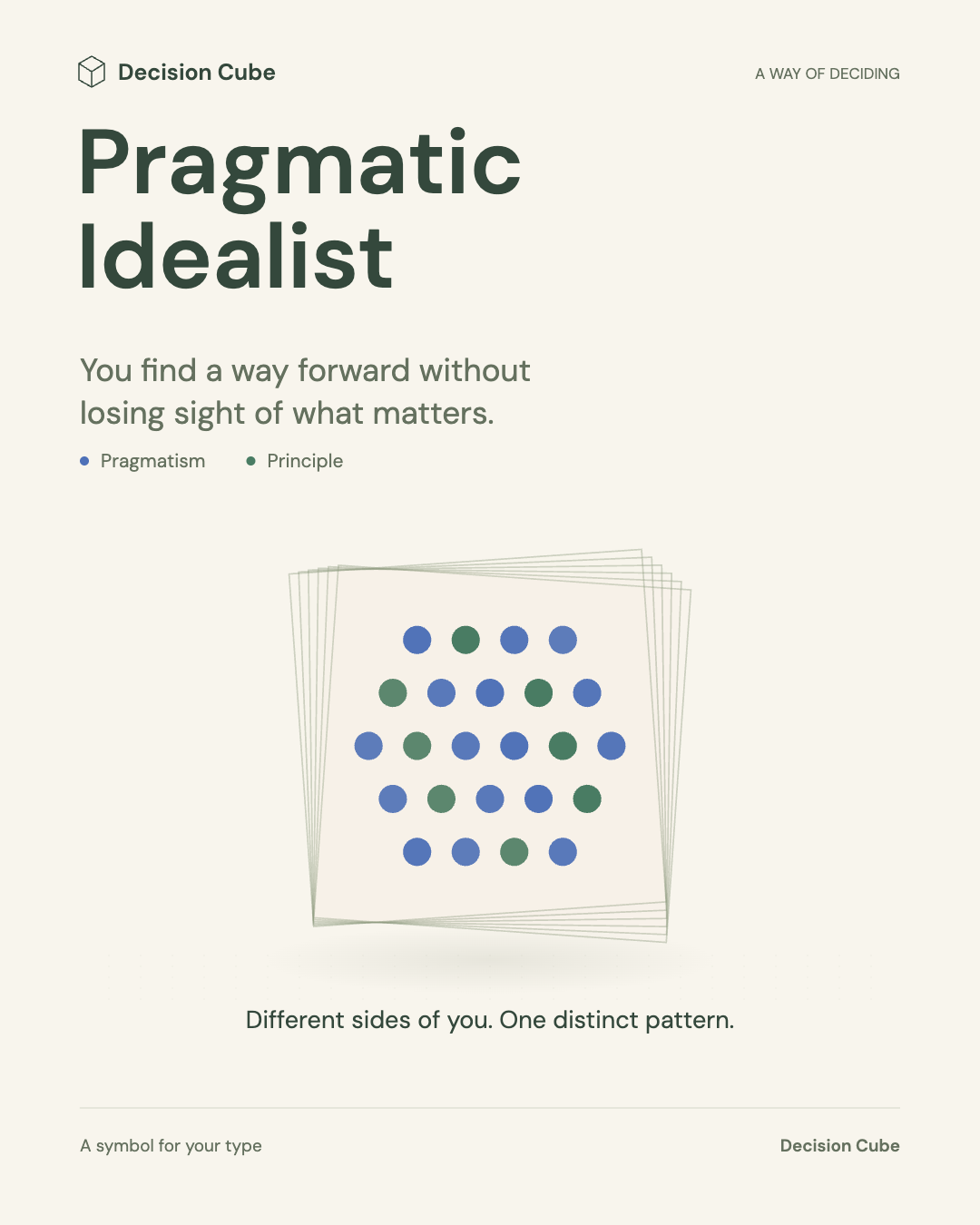
A portrait film and matching card carry the type beyond the result screen. The same visual language, ready to share.
Portrait type film · Pragmatic IdealistMatching still card
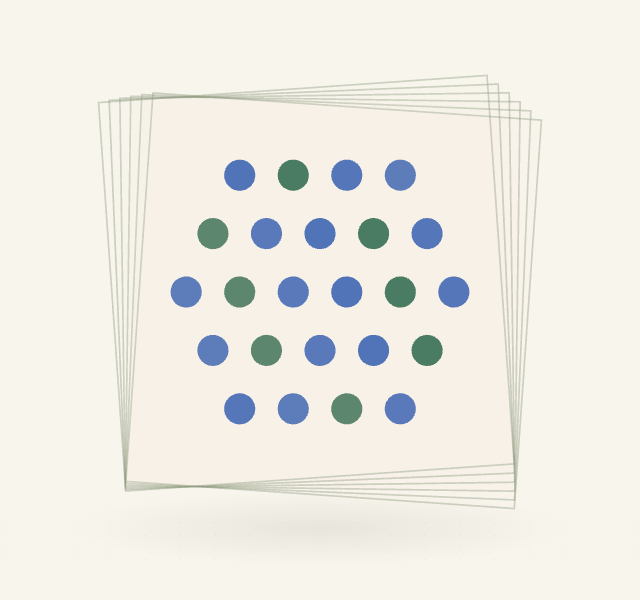
Explore the artwork on its own
Artwork-focused motionArtwork still
A shared symbol for the Pragmatic Idealist type. Its dot proportions are decorative, not personal scores. The eight-choice example above shows actual counts from fictional choices.
From answer to explanation
Show how the result was reached.
Assessment workflow · the source of each claim stays identifiable
Eight situationsChoice · written reason · conviction
Server validationKnown options → assigned priorities → counts
Saved resultType · explanation · personal choice evidence
Public share viewAllowlisted counts & type · image or film
Count on the server
The completion endpoint requires one valid response for every situation, rejects duplicates and out-of-range conviction, and supplies the option labels and priorities itself. The explanation therefore follows the accepted answers, not client-supplied scoring.
Separate reflection from sharing
Public result loading exposes an allowlist of version, answer count and priority counts. Written reasons, email and conviction stay out of that view. The share interface previews a card or type film, then offers the device share menu or a download.
Give a result two visual forms
The personal pattern represents counted choices. The shared type symbol is decorative artwork for a type. Keeping those roles distinct lets colour and motion make the result recognizable without suggesting that decorative proportions measure a person.
Drafts and the last result are retained in the browser. Completed runs have a server persistence path and an addressable result URL; local preview uses isolated files, while the configured application uses database records. The returning browser can show its choice-by-choice evidence, while the public link stays limited to the shareable pattern.
The case-study mixer and example result are illustrative interactions. They use fictional choices and do not submit an assessment. Type films are shared artwork, not individually generated personality measurements.